This blog is part of a series from the US Water Alliance’s Environmental Finance Center Team highlighting technical assistance projects and successes in communities across the country through RealWaterTA. This free, federally funded program helps communities improve their drinking water, wastewater, and stormwater infrastructure; achieve regulatory compliance; and secure federal funding.
Part 1: Completed Projects
Community: Calumet City, Illinois
Technical assistance offered: Support with building financial capacity for infrastructure improvements
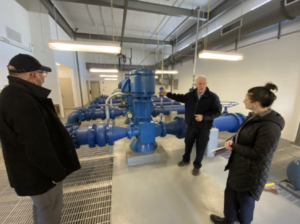
Photo of drinking water infrastructure in Calumet City, February 2024
Background
A major flood event in Calumet City in 2023 exposed vulnerabilities in the community’s wastewater and stormwater systems, which underscored the need for investments to make those systems more resilient. At the same time, the City was facing another major challenge, replacing a large number of lead service lines.
Together, these projects carried large costs. Calumet City had not raised water and sewer rates in many years and did not have a stormwater fee, leaving the City without enough revenue for much-needed investment in its water systems.
Plan of Action
Following a site visit in early 2024, the Alliance’s Environmental Finance Center worked with Calumet City to begin a drinking water and wastewater rate study, as well as a preliminary investigation into a stormwater fee.
The Alliance connected the City with Raftelis, which developed a financial plan for the drinking water, wastewater, and stormwater systems.
The analysis determined that in order to support these systems, it was necessary to increase drinking water and wastewater rates, and implement a stormwater fee, over the next five years.
Outcome
In early 2026, following the support from Raftelis and technical assistance from the Alliance, Calumet City adopted an ordinance amending the existing water and sewer rates. The City increased these rates and implemented a flat stormwater fee.
This process provided City leaders with a clear understanding of the revenue needed to maintain their water systems as well as a path for generating funding to make critical infrastructure improvements in the future.
Community: City of East St. Louis, Illinois
Technical assistance offered: Support with regulatory compliance
Background
The City of East St. Louis faces challenges with combined sewer overflows (CSOs), which occur when a combined sewer system (i.e., a system transporting wastewater and stormwater) becomes overwhelmed during heavy rainfall.
In response to this challenge and a federal Consent Decree from the U.S. Environmental Protection Agency (EPA), the City developed a Combined Sewer Overflow Long-Term Control Plan (LTCP), outlining steps the City could take to address its sewer system overflow issue.
EPA Region 5 connected the City with the Alliance to help advance several technical elements of that plan.
Plan of Action
The Alliance reviewed the LTCP and identified areas that could be addressed through technical support. The Alliance then connected the City with Stantec, which provided technical engineering and public engagement support, as outlined in the LTCP. Stantec’s support helped the City make measurable progress towards the tasks in that LTCP, and their compliance with EPA.
Outcome
Stantec delivered a series of reports to satisfy requirements in the City’s LTCP. A final memo was delivered in spring 2026, marking the conclusion of their work and the Alliance’s assistance for this project.
This technical assistance gave the City of East St. Louis the resources needed to advance elements of its LTCP and a foundation for continued work to address CSOs and public engagement around these efforts.
Part 2: Project Underway
Community: Red Cliff, Wisconsin
Technical assistance offered: Support with regulatory compliance and infrastructure planning
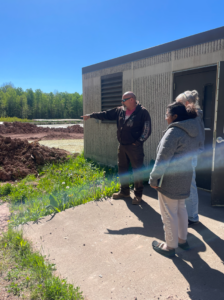
Group assesses the wastewater treatment facility, discussing community infrastructure needs and opportunities for improvements
Background
The Alliance began working with Red Cliff, Wisconsin, home to the Red Cliff Band of Lake Superior Chippewa, in
September 2025. Initially, the Tribe sought assistance to extend their water distribution system to the western boundary of the Reservation. When funding through the Tribal Set-Aside Program appeared unlikely, the Alliance worked with Engineers Without Borders USA (EWB-USA) to connect the community with local engineering experts and explore other technical needs and potential funding opportunities.
Through those conversations, the scope of assistance expanded to a broader assessment of the Tribe’s drinking water and wastewater infrastructure. The goal is to help Red Cliff identify and prioritize critical system needs and determine which projects are best positioned to pursue available funding.
Plan of Action
In May 2026, representatives from EWB-USA, the Red Cliff Public Works and Planning Departments, and Indian Health Services (IHS) met in Red Cliff to assess the Tribe’s drinking water and wastewater systems, discuss operational challenges, and identify long-term priorities.
The team identified several key challenges, including aging infrastructure, significant system leaks and inflow and infiltration (I&I), staffing and operator succession challenges, and limited financial and political support for utility improvements.
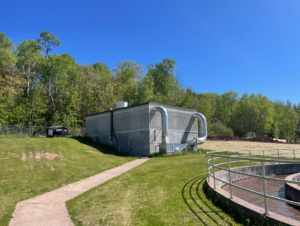
Red Cliff’s wastewater treatment plant pretreatment and testing facilities
Working together, Tribal staff and technical assistance partners completed an asset mapping and prioritization exercise to identify the most pressing system needs and begin developing a path forward.
Priorities will continue to be evaluated based on technical, managerial, and financial feasibility, as well as their alignment with broader Tribal goals including economic development, sovereignty, resilience, and future growth.
Midwest Summary
The projects in Calumet City, East St. Louis, and Red Cliff demonstrate how technical assistance can help communities address a range of water infrastructure challenges – from strengthening financial capacity and navigating regulatory requirements to assessing system needs and identifying priorities for future investment.
Through RealWaterTA, the Alliance and its network of partners work alongside communities to provide technical, financial, and planning support tailored to their specific needs. As these projects show, technical assistance can help communities better understand their challenges and build practical paths forward.
Continue this blog series with case studies from Washington and California.